


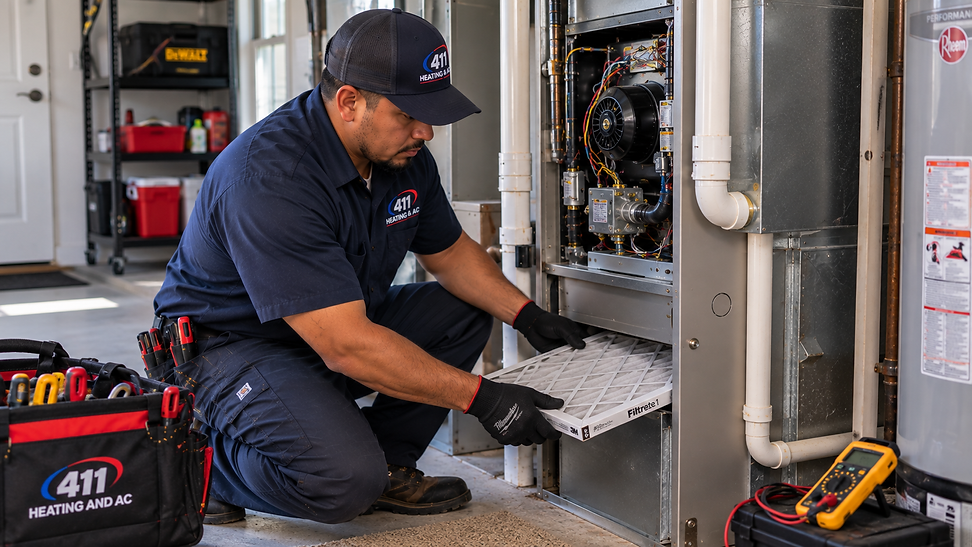
FURNACE MAINTENANCE
FURNACE MAINTENANCE
Regular furnace maintenance helps keep your heating system operating efficiently, safely, and reliably. A professional tune-up can also identify worn components and developing problems before they lead to an unexpected breakdown.
At 411 Heating & AC, we inspect the major components of your furnace, test system operation, and make sure your heating system is ready when you need it.
Key Furnace Maintenance Tasks
01. Clean or Replace the Air Filter
A dirty filter restricts airflow and makes the furnace work harder. We inspect the filter and recommend cleaning or replacement when necessary.
Proper airflow can improve heating performance and help prevent the furnace from overheating.
02. Inspect and Clean the Burners
Burners need to ignite properly and burn consistently. Dirt, corrosion, or buildup can interfere with normal combustion.
We inspect burner condition and operation and clean accessible components when necessary.
03. Check the Ignition System
The ignition system starts the burners when your thermostat calls for heat.
We inspect and test the igniter and related components to make sure the furnace starts properly and reliably.
04. Inspect and Clean the Flame Sensor
The flame sensor confirms that the burners have successfully ignited.
A dirty or failing flame sensor can cause the furnace to light and then shut down shortly afterward. We inspect its condition and clean it when appropriate.
05. Inspect the Heat Exchanger
The heat exchanger is one of the most important components of a gas furnace.
We inspect accessible areas for signs of deterioration, corrosion, overheating, or damage that could affect furnace operation or safety.
Because combustion gases pass through the heat exchanger, suspected damage should always be evaluated by a qualified HVAC technician.
06. Check Gas and Combustion Operation
For gas furnaces, proper fuel delivery and combustion are essential for reliable operation.
Where appropriate for the system, we check burner operation, flame characteristics, gas connections, and combustion performance for signs of improper operation.
07. Inspect the Blower Motor and Assembly
The blower moves heated air from the furnace through your ductwork.
We inspect the blower motor and assembly for dirt, unusual noise, excessive wear, and other conditions that can affect airflow or furnace performance.
08. Check Furnace Airflow
Restricted airflow can reduce comfort and cause excessive temperatures inside the furnace.
We check the filter, return-air path, supply airflow, and other accessible areas that may be restricting air movement.
09. Inspect Electrical Connections and Components
Furnaces depend on numerous electrical components to operate correctly.
We inspect accessible wiring, connections, relays, controls, and other electrical components for looseness, wear, overheating, or other signs of trouble.
10. Test Furnace Safety Controls
Modern furnaces contain safety devices designed to shut the system down when unsafe operating conditions are detected.
We test applicable furnace safety controls and verify that the system is operating properly.
11. Inspect the Venting and Flue System
Gas furnaces must safely vent combustion gases outside the home.
We inspect accessible venting and flue components for signs of blockage, corrosion, deterioration, loose connections, or other problems that could interfere with proper venting.
12. Check the Thermostat
We test the thermostat to make sure it is communicating properly with the furnace and accurately controlling the heating cycle.
We also check basic thermostat settings and operation.
13. Inspect Ductwork and Vents
Leaking, damaged, disconnected, or restricted ductwork can reduce heating performance and create uneven temperatures throughout the home.
Accessible ducts, supply vents, and return-air grilles can be checked for obvious airflow problems.
14. Check for Unusual Furnace Noises
Rattling, grinding, squealing, buzzing, or other new noises can be early signs of a developing mechanical or electrical problem.
During operation, we listen for abnormal sounds that may require further inspection.
15. Check for Signs of Carbon Monoxide or Combustion Problems
Because fuel-burning furnaces produce combustion gases, proper combustion and venting are important safety considerations.
Conditions that suggest improper combustion, venting problems, or possible carbon-monoxide concerns require further investigation and should never be ignored.
16. Test a Complete Heating Cycle
After the inspection and maintenance are completed, we operate the furnace through a complete heating cycle.
We verify that the thermostat calls for heat, the ignition sequence occurs properly, the burners operate correctly, the blower starts as expected, warm air is delivered through the system, and the furnace shuts down normally.
What's Included in a Furnace Tune-Up?
A professional furnace tune-up from 411 Heating & AC may include:
-
Inspecting or replacing the air filter
-
Inspecting and cleaning burners
-
Checking the ignition system
-
Inspecting and cleaning the flame sensor
-
Inspecting the heat exchanger
-
Checking gas and combustion operation
-
Inspecting the blower motor and assembly
-
Checking furnace airflow
-
Inspecting electrical connections and components
-
Testing furnace safety controls
-
Inspecting venting and flue components
-
Testing thermostat operation
-
Inspecting accessible ductwork and vents
-
Checking for unusual noises
-
Looking for signs of improper combustion
-
Testing the complete furnace heating cycle
-
Checking overall furnace performance
-
The purpose of a tune-up is not simply to see whether the furnace turns on. We inspect the system for conditions that can affect performance, reliability, efficiency, and safety.
Signs Your Furnace May Need Maintenance
Your furnace may need attention if you notice:
-
Furnace running longer than normal
-
Weak airflow
-
Uneven heating
-
Furnace turning on and off frequently
-
Unusual banging, rattling, squealing, or buzzing
-
Higher heating bills
-
Furnace struggling to reach the thermostat setting
-
Delayed or repeated ignition
-
Unusual odors
-
Furnace starting and then quickly shutting down
-
Yellow or irregular burner flame
-
Furnace hasn't been professionally serviced recently
-
If you smell gas or a carbon-monoxide alarm activates, don't treat it as a routine maintenance issue. Leave the affected area and follow the appropriate emergency procedures.
Preventative Furnace Maintenance
Preventative maintenance is designed to find developing furnace problems before they become major repairs or unexpected breakdowns.
A component may still be operating while showing signs of wear. Finding problems with ignition components, electrical connections, airflow, burners, the blower, or safety controls during maintenance gives you an opportunity to address them before the furnace stops working.
Regular preventative maintenance can help:
-
Reduce unexpected breakdowns
-
Maintain proper airflow
-
Improve heating performance
-
Reduce unnecessary equipment strain
-
Identify worn components early
-
Maintain reliable furnace operation
-
Help protect major furnace components
-
Identify potential safety concerns
-
Extend the useful life of the heating system
-
When Should You Schedule Furnace Maintenance?
For most residential furnaces, professional maintenance should generally be scheduled once a year.
Fall is an ideal time because the furnace can be inspected before colder weather arrives and the system begins operating heavily.
However, if your furnace hasn't been serviced recently, you don't need to wait until fall. Maintenance can be performed whenever you want to have the system inspected.
Seasonal Furnace Maintenance Tips
Before Winter: Replace or inspect the filter, test the thermostat, make sure vents aren't blocked, and schedule a professional furnace tune-up.
During Winter: Continue checking the filter and pay attention to unusual noises, odors, short cycling, weak airflow, or changes in heating performance.
After Winter: Don't ignore problems that appeared during the heating season. Addressing them before the next winter can help prevent surprises when you turn the furnace back on.
Benefits of Regular Furnace Maintenance
Better Heating Performance: Proper airflow, combustion, and system operation help your furnace heat the home more effectively.
Improved Efficiency: A clean and properly operating furnace doesn't have to work unnecessarily hard to maintain the selected temperature.
Fewer Unexpected Repairs: Developing problems can often be identified before they cause complete furnace failure.
More Consistent Comfort: Proper furnace operation and airflow help distribute heat more evenly throughout the home.
Longer Equipment Life: Reducing unnecessary strain and addressing worn components can help protect the furnace.
Improved Reliability: Regular maintenance helps prepare your furnace for periods of heavy winter use.
Safety: Inspection of the heat exchanger, burners, combustion, venting, electrical system, and safety controls can help identify conditions that require attention.
Keep Your Furnace Ready for Cold Weather
Don't wait until the first cold night to discover that something is wrong with your furnace.
A professional furnace tune-up from 411 Heating & AC gives us an opportunity to inspect the heating system, test its operation, and identify problems before you depend on it throughout the winter.
If your furnace hasn't been serviced recently, contact 411 Heating & AC to schedule preventative furnace maintenance and a complete heating-system tune-up.
Call 411 Heating & AC Today